
By Blowplast Editorial Team | Reviewed by Blowplast Quality Assurance & Packaging Engineering Team | July 2026
Have you ever picked up a plastic water bottle and wondered how it got its shape? Or why some plastic products are solid while others are hollow?
The answer lies in the manufacturing process.
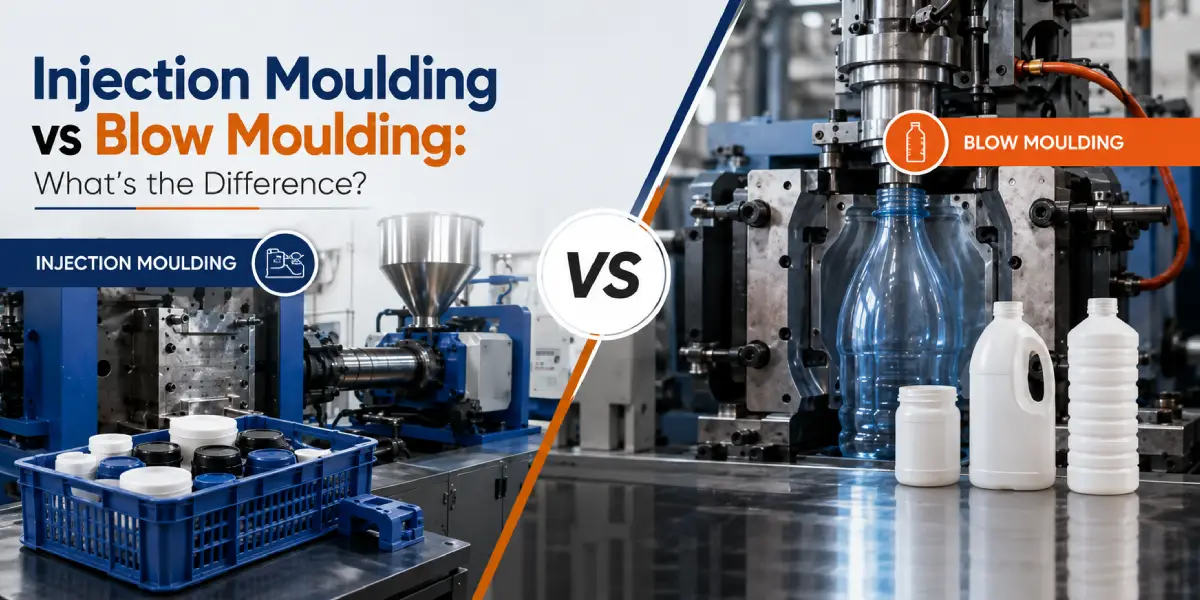
Two of the most common methods used to make plastic products are injection moulding and blow moulding. While they may sound similar, they serve very different purposes. Understanding the difference can help businesses choose the right packaging solution for their products.
Whether you’re looking for a plastic jar manufacturer in Pakistan or a trusted supplier of PET bottles, knowing how these manufacturing processes work can help you make a more informed decision.
Let’s break it down.
What Is Injection Moulding?
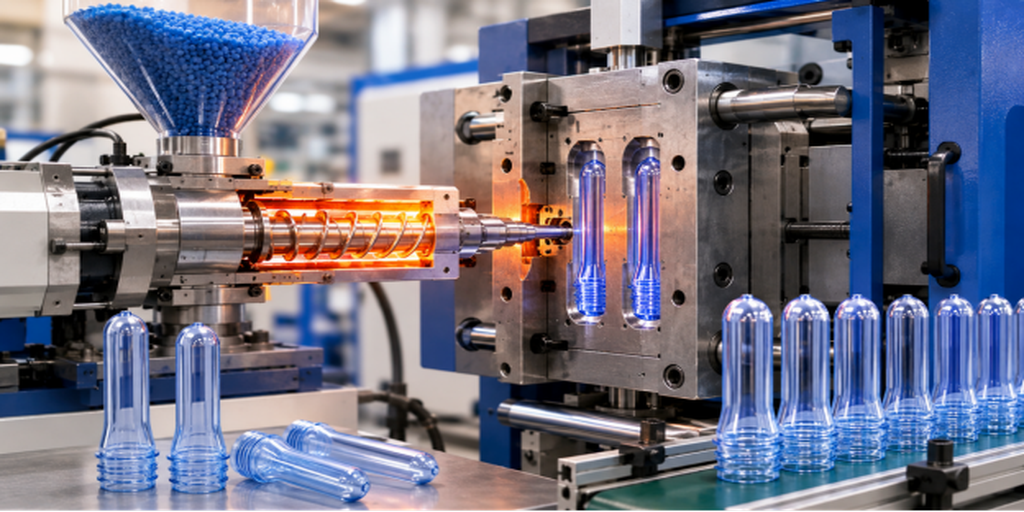
Imagine squeezing melted chocolate into a mould to make chocolate bars. Injection moulding works in a similar way, except it uses melted plastic instead of chocolate.
In this process, plastic pellets are melted and injected into a metal mould under high pressure. The plastic cools, hardens, and comes out in the exact shape of the mould.
This method is ideal for making solid plastic parts with detailed designs and consistent quality.
Common injection moulded plastic products include:
- Bottle caps
- Plastic lids
- Food containers
- Automotive parts
- Medical components
- Household items
Injection moulding is perfect when precision matters and thousands of identical products need to be produced quickly.
What Is Blow Moulding?
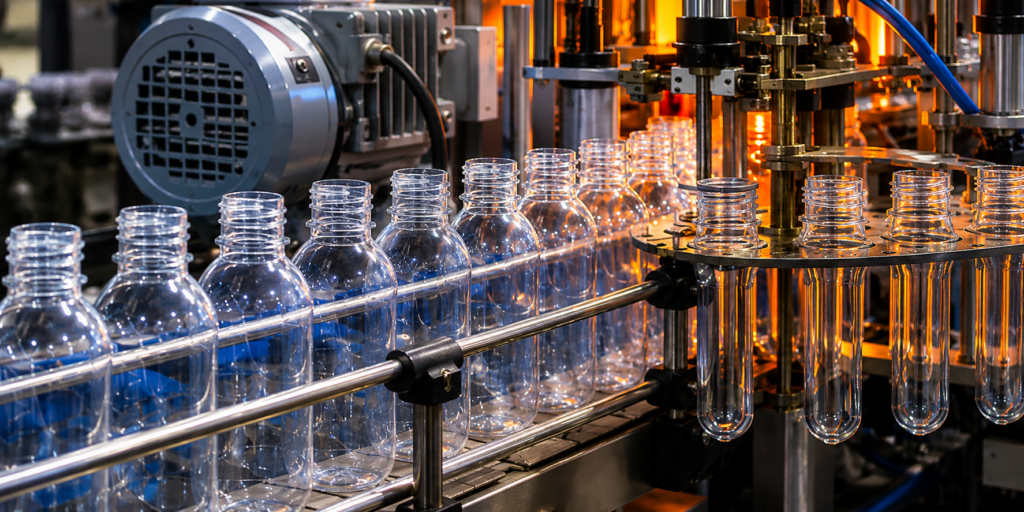
Now imagine blowing air into a balloon. The balloon expands and becomes hollow. Blow moulding follows the same basic idea.
A tube of hot plastic is placed inside a mould, and compressed air is blown into it. The plastic expands until it fits the mould walls, creating a hollow product.
This process is mainly used for manufacturing:
- PET water bottles
- Beverage bottles
- Shampoo bottles
- Plastic jars
- Chemical containers
- Oil bottles
That’s why every reliable PET bottles manufacturer depends on blow moulding to produce lightweight, durable, and food-safe bottles.
Comparison at a Glance
Here’s a quick comparison of injection moulding and blow moulding.
| Feature | Injection Moulding | Blow Moulding |
| Product Type | Solid or structurally rigid parts | Hollow containers |
| Typical Products | Caps, lids, fittings, components | Bottles, jars, containers |
| Manufacturing Method | Molten plastic injected into mould | Heated plastic expanded with air |
| Best For | Precision and detailed components | Lightweight packaging |
| Typical Materials | PP, PE, ABS, and PET (primarily for preforms) | PET, HDPE, PP |
| Production Speed | Very high | Very high |
| Main Advantage | Precision | Lightweight hollow products |
The right process depends on your product’s design and intended application.
Which Products Are Made Using Injection Moulding?
Injection moulding is ideal when strength, precision, and detailed shapes are important.
Typical products include:
- Bottle caps
- Food container lids
- Plastic fittings
- Electrical components
- Industrial parts
- Medical device components
- Packaging accessories
Because the moulds are highly precise, manufacturers can produce thousands of identical products with excellent consistency.
Which Products Are Made Using Blow Moulding?
Stretch blow moulding is the preferred manufacturing process for producing hollow PET bottles and containers. It creates lightweight, durable packaging with excellent strength, clarity, and dimensional consistency, making it ideal for beverage, edible oil, pharmaceutical, and personal care packaging.
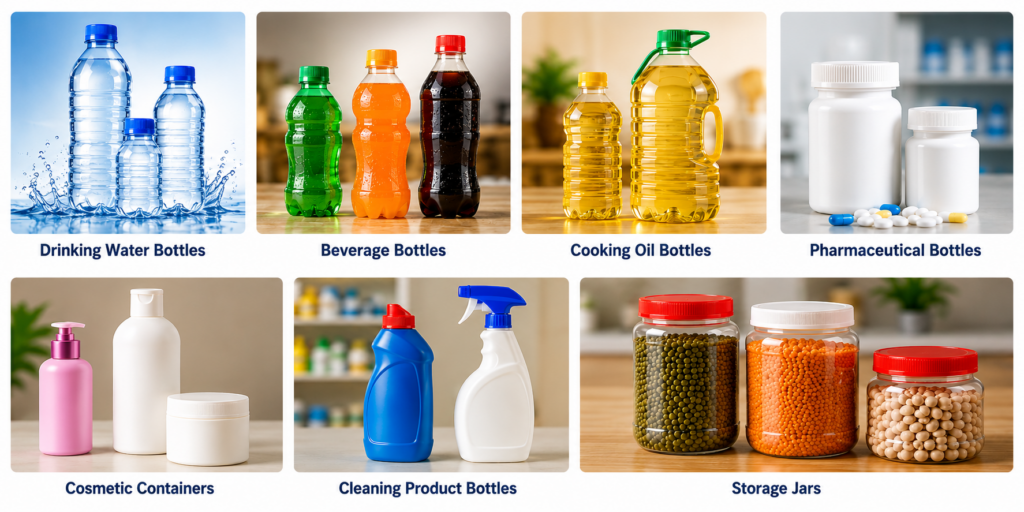
Products include:
- Drinking water bottles
- Beverage bottles
- Cooking oil bottles
- Pharmaceutical bottles
- Cosmetic containers
- Cleaning product bottles
- Storage jars
A PET bottle blow mould is specially designed to produce bottles with consistent wall thickness, accurate dimensions, and an attractive finish. The quality of the mould plays a major role in producing bottles that perform reliably during filling, transportation, and storage.
Why Is PET Commonly Used for Blow Moulding?
PET (Polyethylene Terephthalate) has become one of the world’s most widely used packaging materials for food and beverages.
It offers several advantages:
- Lightweight design
- Excellent clarity
- Good impact resistance
- Suitable for food-contact applications when manufactured using food-grade PET resin
- Recyclable through established recycling systems
- Cost-effective for large production volumes
These qualities make PET an excellent choice for businesses looking for reliable packaging that also looks good on store shelves.
Which Process Is Better?
The honest answer is neither.
The right process depends entirely on the product you’re making.
If you need:
- A bottle cap → Injection moulding is the better option.
- A water bottle → Blow moulding is the better option.
- A shampoo bottle → Blow moulding.
It’s a bit like asking whether a spoon is better than a fork. They’re both useful; you just don’t want to eat soup with a fork.
How Do Injection Moulding and Blow Moulding Work Together?
Many people think manufacturers choose one process or the other.
In reality, they often use both.
Take a PET water bottle as an example.
First, a PET preform is manufactured using injection moulding. This preform looks like a small test tube with bottle threads already formed.
Once heated, the preform is placed inside a blow mould to form the final bottle. Compressed air expands it until it takes the shape of the finished bottle.
This two-step process helps manufacturers produce bottles that are lightweight, strong, and consistent in quality.
Manufacturing Process Mistakes to Avoid
Businesses sometimes assume that a single plastic manufacturing process can produce every type of product. In reality, selecting the wrong process can increase costs, reduce production efficiency, or result in a product that doesn’t perform as intended.
For example:
- Using injection moulding for large hollow containers would require unnecessary material and higher production costs.
- Using blow moulding for precision mechanical parts would not provide the dimensional accuracy required.
- Selecting the wrong bottle design may lead to uneven wall thickness, which can affect product durability.
Working with an experienced packaging manufacturer during the design stage helps avoid these issues before production begins.
Which One Costs Less?
This is a question we hear quite often.
The answer depends on:
- Product design
- Size
- Material
- Production volume
- Tooling requirements
Injection moulds can be more expensive because they often require greater precision and complex designs.
Blow moulds are generally simpler for bottle production, making them a cost-effective option for packaging manufacturers.
If you’re planning to manufacture bottles in large quantities, blow moulding is often the more economical choice.
How Blowplast Maintains Quality During Manufacturing
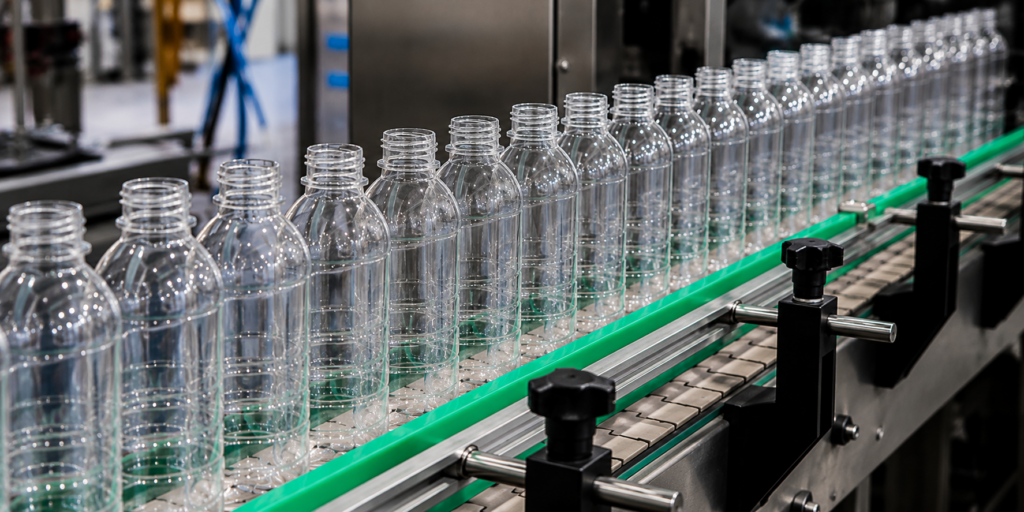
Manufacturing high-quality PET bottles requires more than selecting the right raw material. Consistent quality depends on precise mould design, controlled processing conditions, routine equipment maintenance, and continuous quality inspection throughout production.
At Blowplast, our manufacturing process focuses on:
- Precision-engineered blow moulds
- Controlled processing temperatures
- Uniform wall thickness
- Dimensional consistency
- Regular quality inspections
- Food-grade PET resin suitable for food-contact packaging
- Consistent neck finishes for reliable cap sealing
Why Choose Blowplast?
During bottle development, our engineers evaluate wall thickness distribution to ensure bottles perform reliably during transport and filling.
As a trusted PET bottles manufacturer, we produce durable, lightweight, and reliable PET bottles for a wide range of industries. Our focus is on delivering bottles that meet high-quality standards, support your brand, and perform consistently in everyday use.
No matter your industry, Blowplast delivers strong, reliable, and attractive packaging solutions for beverages, edible oils, personal care, and household products.
Conclusion
Understanding the difference between injection moulding and blow moulding is an important first step when selecting plastic packaging. While injection moulding is ideal for precision components such as caps and lids, blow moulding remains the preferred process for manufacturing lightweight, durable PET bottles.
As one of the trusted rigid plastic manufacturers, Blowplast helps businesses choose the right bottle design and manufacturing process for their packaging needs. Whether you’re launching a new product or expanding production, our team is committed to delivering reliable PET bottle solutions that meet your quality, performance, and production requirements.
Contact Blowplast today to discuss your packaging project and discover the right PET bottle solution for your brand.
Why Trust This Guide?
This guide has been prepared by the Blowplast Editorial Team and technically reviewed by our Quality Assurance and Packaging Engineering teams. It is based on widely accepted plastic manufacturing principles and our practical experience in PET bottle production. The information is intended to help businesses understand the differences between injection moulding and blow moulding when selecting plastic packaging solutions.
Frequently Asked Questions
1. Can injection moulding make bottles?
Injection moulding produces PET preforms, which are later transformed into bottles using stretch blow moulding. The bottle itself is not produced solely by injection moulding.
2.Why are PET bottles made in two stages?
Manufacturing bottles from injection-moulded preforms helps achieve accurate neck finishes, lightweight construction, and consistent bottle quality.
3. Which process is faster?
Both processes support high-volume manufacturing. Injection moulding is ideal for producing precise plastic components, while blow moulding is optimized for manufacturing large quantities of hollow bottles efficiently.
4. Is blow moulding more economical?
For high-volume bottle production, blow moulding is generally more cost-effective because it uses less material to produce lightweight hollow containers.
Editorial Note:
This article is intended for educational purposes and provides general information about injection moulding and blow moulding. Manufacturing methods, material selection, and production parameters may vary depending on product design, application, and customer requirements.