
By Blowplast Editorial Team | Reviewed by Blowplast Quality Assurance & Packaging Engineering Team | August 2026
Suppose a food startup in Karachi orders thousands of PET jars from a supplier for a new snack brand. The jars look attractive in the supplier’s catalog, the price seems reasonable, and delivery is quick. However, once production starts, the labels don’t stick properly, the jars don’t fit into the cartons, and transport costs end up higher than expected.
The error wasn’t in selecting PET jars; it was in ordering them without first considering a few important details.
Choosing the right PET jar helps businesses that package food, cosmetics, pharmaceuticals, chemicals, or household products save time and money while avoiding common problems.
The main factors to look at before placing your next order.
1. Understand Your Product Requirements
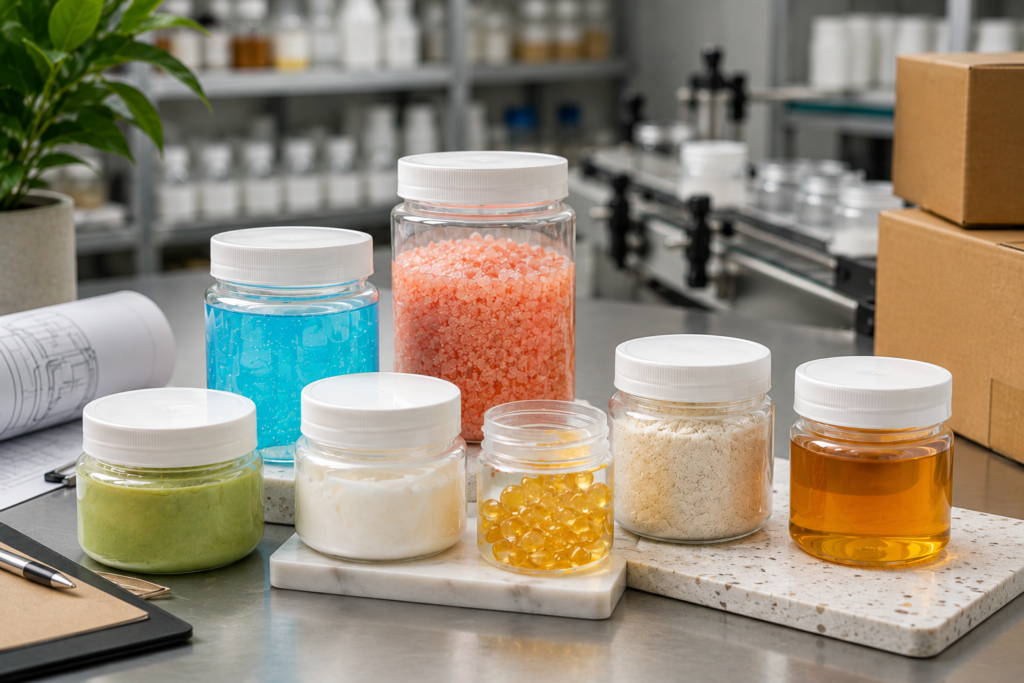
Before you contact a PET jar manufacturer, define the requirements for the product you plan to package.
Ask yourself:
- What is the viscosity and consistency of the product?
- Is it acidic, oily, solvent-based, or otherwise chemically active?
- Does it need protection from moisture, oxygen, or light?
- What temperature will be used for filling?
- How long will the product stay in the container?
- Will the product be stored or transported under hot conditions?
For instance, food products might need food-grade PET jars, while cosmetic products may need containers that look premium and have a crystal-clear finish.
The more you know about your product, the easier it will be to choose the correct packaging solution.
2. Pick the Correct Size
Don’t choose a jar based only on its nominal volume; check the jar’s actual dimensions, its fill volume, neck opening size, weight, and compatibility with your filling and capping equipment.
A jar that is too big wastes shelf space and raises shipping costs, while one that is too small may upset customers.
Before ordering, confirm:
- Nominal capacity
- Brimful capacity
- Jar height
- Diameter
- Neck finish
- Opening diameter
- Jar weight
- Filling-line compatibility
Although a 500 ml jar may appear perfect on the line, it could suddenly turn out to be ‘the jar that refuses to cooperate’ on your production line.
3. Choose the Right Jar Material
Not every plastic jar suits every product.
PET (Polyethylene Terephthalate) is commonly used for packaging since it offers clarity, good impact resistance, a relatively low packaging weight, and an attractive look on retail shelves. Yet its suitability varies by product, container design, processing conditions, and intended storage environment.
If you’re looking for rigid plastic jar manufacturers in Pakistan, make sure they offer food-grade, high-quality PET materials that meet your industry requirements.
The correct PET specification should be selected based on the product, filling process, storage conditions, and required packaging performance, not appearance alone.
4. Consider Customization Options
When considering customization, also consider manufacturability, minimum order quantities, tooling needs, color consistency, and lead times.
Look for suppliers that offer:
- Custom colors
- Different lid options
- Branding solutions
- Label-friendly surfaces
- Various jar shapes and designs
Many businesses now work with custom plastic bottle manufacturers and jar suppliers to create packaging that reflects their brand identity.
In fact, if all your competitors use identical jars, how will customers remember your brand?
5. Evaluate Cap and Closure Compatibility
The jar is only half the story. The closure matters just as much.
An incompatible lid can lead to:
- Product leakage
- Contamination
- Customer complaints
- Product waste
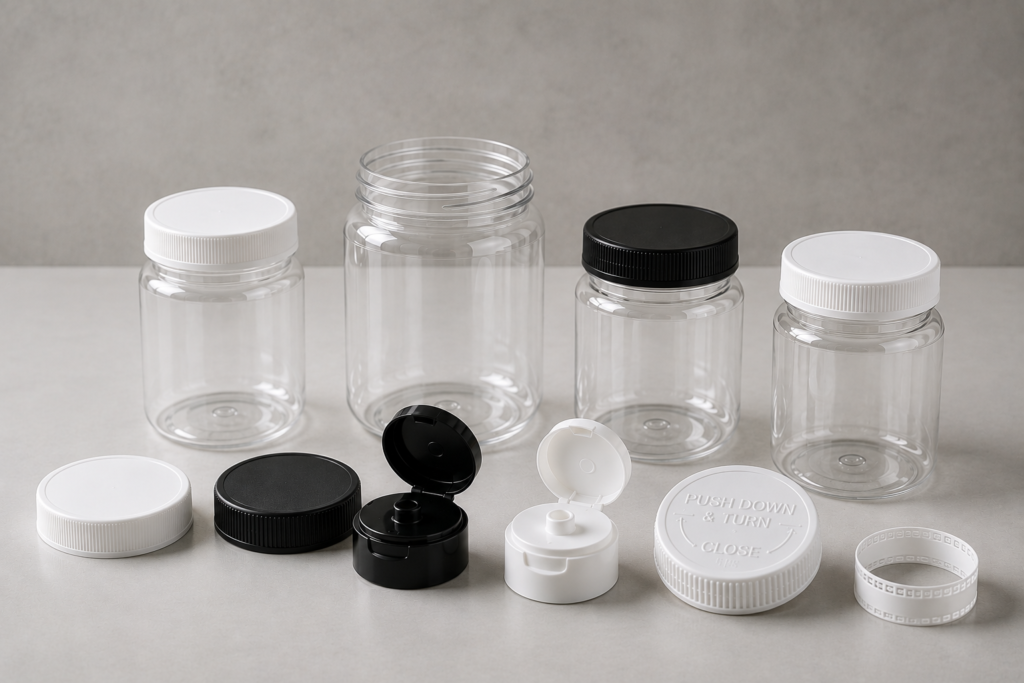
Don’t assess the jar and cap individually; check the neck finish, cap dimensions, liner or sealing system, torque requirements, and tamper-evident configuration as a complete set.
Common options include:
- Screw caps
- Flip-top caps
- Tamper-evident closures
- Child-resistant caps
After filling, capping, storage, and transport, check the closure for any leakage.
6. Verify Food-Grade and Industry Compliance
“Compliance” means different things depending on:
- product category
- country of sale
- intended use
- food-contact application
- pharmaceutical application
- chemical compatibility
- migration requirements
- labeling requirements
You should request from the PET bottle manufacturer in Pakistan any documentation relating to the intended use of the bottles, including material specifications, food-contact declarations where they are applicable, quality-control records, and any other compliance documents required by your market or industry.
It is especially important when exporting goods or supplying large retail chains.
7. Check Product Compatibility
Test a PET jar with the actual product before approving a large production order. A container that works well for one formulation may not perform the same way with another.
- Chemical compatibility
- Odor/scalping considerations
- Discoloration
- Container deformation
- Leakage
- Product interaction
- Shelf-life testing
- Storage temperature
Expert recommendation: For new formulations, request samples and test compatibility with the actual product under expected storage and transport conditions.
8. Check Minimum Order Quantity (MOQ)
Bulk buying saves money, but only if you actually need the quantity.
Look at the supplier’s minimum order quantity in relation to your sales forecast, storage capacity, working capital, and the expected changes in packaging. If you don’t use excess inventory, a lower unit price can still be expensive.
Before ordering, ask about:
- MOQ
- Price breaks
- Tooling costs
- Sample costs
- Production lead time
- Repeat-order lead time
- Payment terms
Reliable suppliers offering plastic jars wholesale in Pakistan usually offer better pricing for larger orders and help businesses plan future production.
9. Consider Transportation and Storage
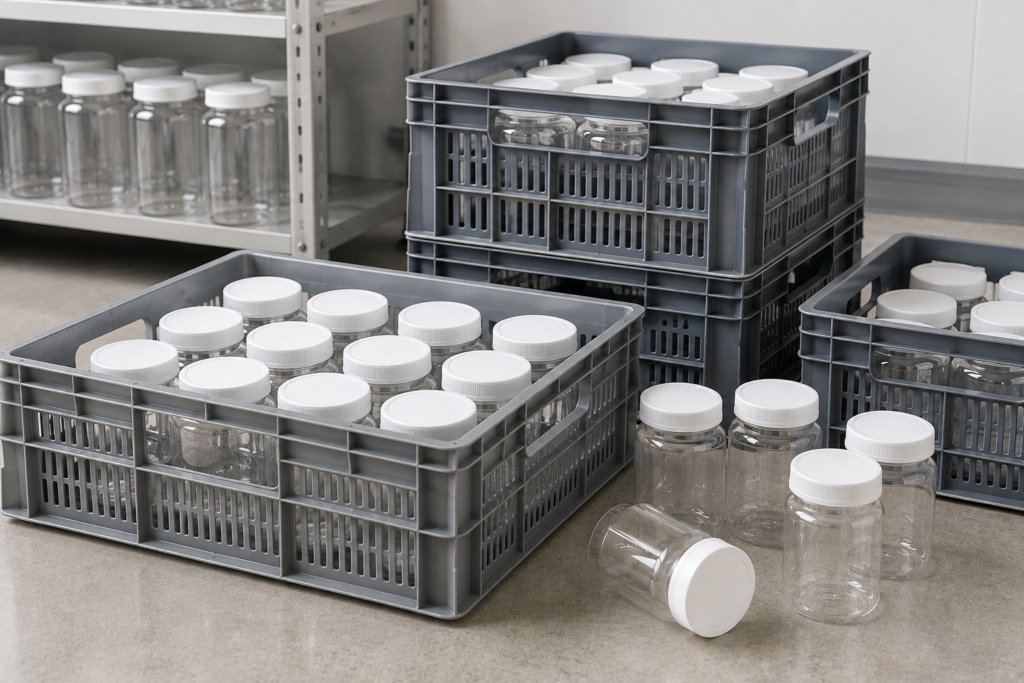
PET jars travel a lot before reaching customers.
Good packaging should handle:
- Stacking
- Shipping vibration
- Temperature changes
- Warehouse storage
PET containers can reduce packaging weight compared with some heavier alternatives, but the actual logistics benefit depends on container weight, carton configuration, pallet utilization, shipment distance, and freight method.
Your logistics team will certainly appreciate this, even if they never send you a thank-you card.
10. Review Supplier Reputation
Before choosing a supplier, do some research.
Check:
- Customer reviews
- Industry experience
- Existing client portfolio
- Manufacturing facilities
- Product samples
Established plastic jar manufacturers in Pakistan often have years of experience serving multiple industries and can provide valuable recommendations based on previous projects.
A good supplier goes beyond just selling packaging by helping to solve packaging problems.
Request These Documents Before Ordering:
Before you place an order for bulk PET jars, ask the supplier for documents relevant to your product and market. This lets you verify specifications, compliance, and order details before production starts.
Request, where applicable:
- Product specification sheet: Capacity, dimensions, weight, neck finish, and material details.
- Food-contact or compliance declaration: For food, pharmaceutical, cosmetic, or other regulated applications where required.
- Certificate of Analysis (COA) or relevant test reports: To verify agreed material or quality specifications.
- Closure specifications: Cap dimensions, liner details, sealing requirements, and compatibility.
- Approved sample or sample sign-off: To confirm the physical jar before bulk production.
- Quotation invoice: Covering quantity, pricing, tooling, delivery terms, and payment conditions.
This doesn’t mean all documentation applies to every product; ask the supplier which documents are relevant to your specific application and market.
Why Businesses Choose Blowplast for PET Packaging
Choosing a PET jar manufacturer isn’t just about finding the lowest unit price. The right supplier should help you choose packaging that fits your product, production process, branding requirements, and supply needs.
At Blowplast, we help businesses evaluate these requirements before moving to bulk production.
What Blowplast can support
- PET packaging for different product applications: Helping businesses identify suitable jar formats based on product and packaging requirements.
- Jar and closure selection: Matching containers with appropriate neck finishes and closure options.
- Custom packaging development: Supporting custom shapes, colors, designs, and other specifications where technically and commercially feasible.
- Bulk manufacturing: Supplying PET packaging for businesses with recurring or large-volume requirements.
- Production quality checks: Helping maintain consistency in dimensions, appearance, weight, and other agreed specifications.
- Packaging specification support: Assisting customers with important details such as capacity, dimensions, closure compatibility, and order requirements.
- Supply support across Pakistan: Helping businesses source PET packaging for ongoing production requirements.
We help you evaluate the packaging specification, select suitable PET jar and closure options, review samples, and move toward bulk production with clearer requirements.
Final Thoughts
PET jars are versatile, durable, and cost-effective, but choosing the right one involves more than size and price. Material quality, customization, compliance, and supplier reliability all matter.
At Blowplast, we provide packaging solutions designed to protect products, strengthen brands, and support business growth.
Ready to choose the right PET jar for your business? Contact Blowplast today and let’s find the right packaging solution for you.
Frequently Asked Questions
- How do I choose the right PET jar size?
Check capacity, dimensions, neck opening, product volume, and filling-line compatibility.
- Are all PET jars suitable for food products?
No. Confirm that the specific material and packaging configuration meet the applicable food-contact requirements.
- Should I request samples before ordering?
Yes. Test the jar with your actual product, closure, filling process, and storage conditions.
- What documents should I request from the supplier?
Request relevant specifications, compliance or food-contact documentation, test reports, closure details, and an approved sample.
- What should I check before placing a bulk order?
Confirm product compatibility, jar and closure specifications, MOQ, quality requirements, lead time, pricing, and delivery terms.